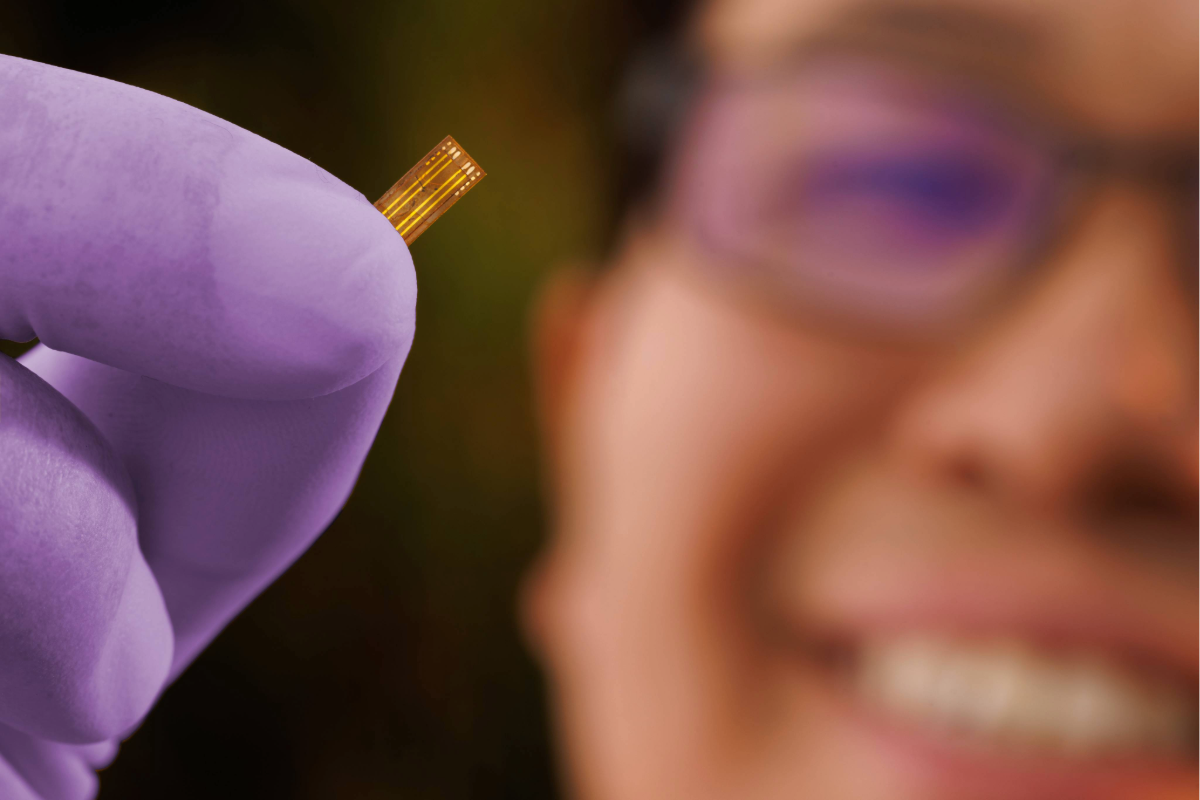
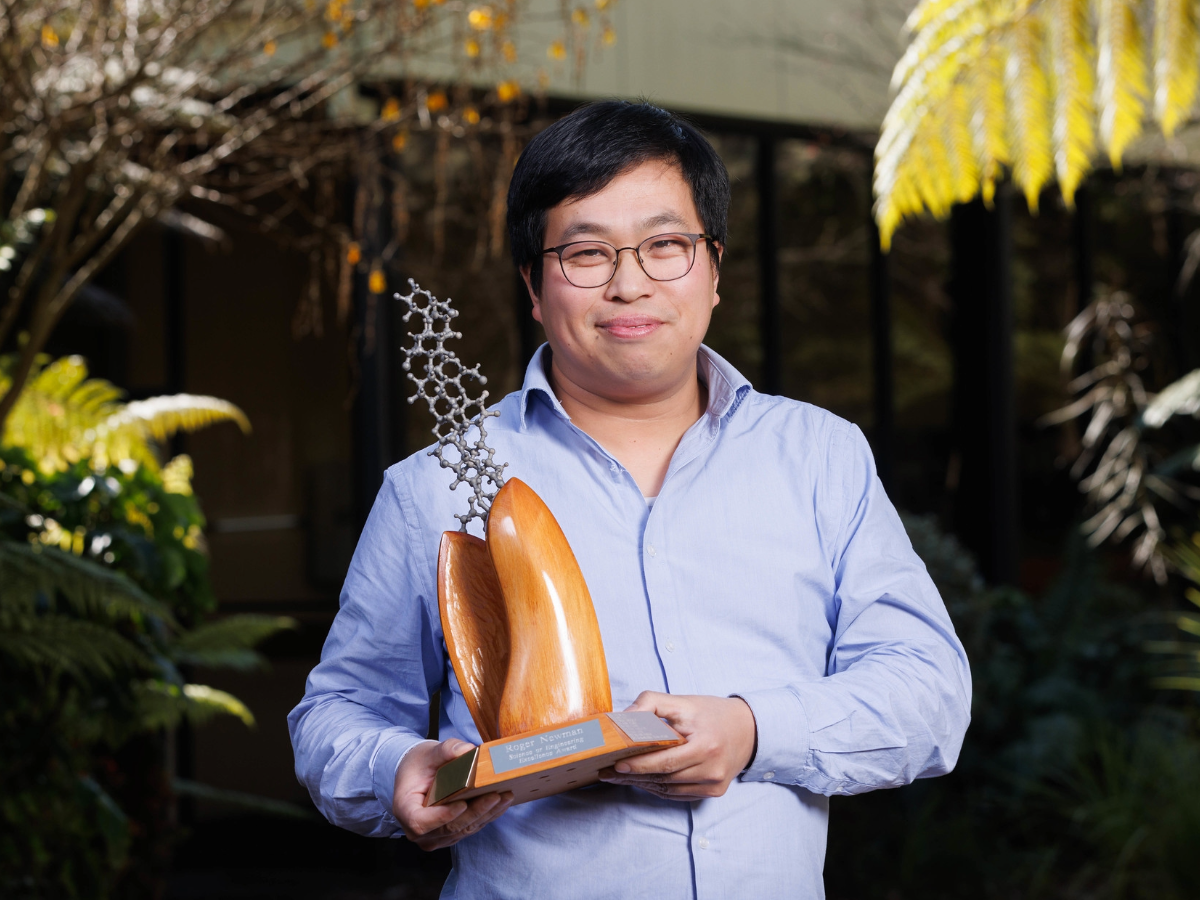
Yi is a material scientist at Bioeconomy Science Institute Maiangi Taiao, focused on bridging the gap between research and real-world application. The UPWEARS project, led by Yi and focused on turning natural fibres into bio-inspired e-textiles for use across the sport industry, is one example. Yi and his team are working to develop sustainable smart clothing for cyclists.
He works across a wide range of other topics – from pest detection to packaging and forest monitoring – so his days are full of variety and, sometimes, travel. This week Yi is heading to Brussels to attend an international science collaboration showcase. Held at the UK Ambassador to the European Union’s residence, the event brings together Horizon Europe member states and associated countries. New Zealand is the first non‑European country to formally associate to Pillar Two of Horizon Europe.
The trip, funded by the Ministry of Business, Innovation and Employment, will see Yi join eight other senior researchers and scientists leading New Zealand Horizon Europe projects. They’ll showcase achievements, strengthen partnerships and explore future collaborative opportunities. Fellow Bioeconomy Science Institute scientist David Teulon is also part of the delegation.
Yi was chosen for his understanding of the Horizon Europe programme. “Delegates are mainly Horizon Europe project leaders who could showcase success stories and strengthen New Zealand’s track record,” he says.
The Bioeconomy Science Institute has a long history of working with international partners, particularly in Europe. New Zealand’s small size, Yi says, makes collaboration vital. “We’ve been working with European partners for decades. This collaboration is essential for success and innovation. For example, UPWEARS builds on the LIA BIOMATA collaboration, which is an international associated laboratory (LIA) on biobased products jointly established between the Bioeconomy Science Institute and INRAE (France’s National Research Institute for Agriculture, Food and Environment).
“I’ve worked hard to connect New Zealand with Europe — despite the distance and the late‑night meetings. I’m proud of that.”
Career pathways
Yi grew up in China, living about 90 minutes from Shanghai by train. He always wanted to be a scientist and completed his PhD – on how to convert cellulose from wood into high-value electronic applications – in South Korea. “I’m an only child and my parents didn’t want me to go too far,” he says.
“Though they supported my desire to study overseas.”
South Korea, about two hours by plane from Shanghai, was a practical choice.
From there Yi then went to Canada for a post-doctoral position. He stayed five years, splitting his time between Ontario’s Western University and the University of Alberta. “Canada offered many research opportunities, but it was too cold,” he says.
So he moved to Rotorua, taking up a role with Scion (which was absorbed into the Bioeconomy Science Institute in 2025) 10 years ago. His early days here, he says, were challenging. “I’d come from an academic environment into a research institute with a strong industry and primary-sector focus, and adapting my thinking was hard.”
He also wasn’t sure how to position himself at work and in a new city.
Rotorua life
Yi recalls arriving in Rotorua on a dark July evening in 2015. “I couldn’t see anything, only noticed the smell,” he laughs.
He soon found his feet and now considers Rotorua a good place for research. “It’s peaceful and convenient, with fewer distractions compared to big cities.”
He keeps himself busy playing soccer, watching old movies and travelling. Wellington is Yi’s favourite place outside Rotorua because it’s unique, a bit European, with good food, though he’s not sure he likes the airport landings when it’s windy.
His parents have come to see him in Rotorua several times, though he says their visits are less frequent now they’re getting older. “It’s a long way for them to come, so I try and go there more,” he says. “Travelling from New Zealand is hard, though – everything is so far away.”
He’d know; he’s been to at least 20 countries.
Yi has also recently got into gardening, somewhat reluctantly. It started as a chore after his wife asked him to remove the weeds – but he’s grown to enjoy learning about landscaping and how to help plants thrive. “This aligns well with my work with pests, food and plants,” he says.
One of Yi’s past projects involved translating concepts from neuroscience and healthcare into applications for plant sensing. An implantable ion sensor enabling continuous, long-term and in vivo plant monitoring was developed for the first time through a collaboration with the University of Cambridge (UK). “Seeing these technologies progress from concept to successful trials has been deeply rewarding,” he says.
That satisfaction keeps Yi’s passion for his work alive. He’s excited about the future and sees a long future for himself in New Zealand with plenty of challenges ahead, such as looking at how sensors developed in Rotorua to monitor signals inside pine trees could be adapted for other plants or scaled up for mass production.
“I’m proud of what I’ve achieved but there’s much more progress to be made.”