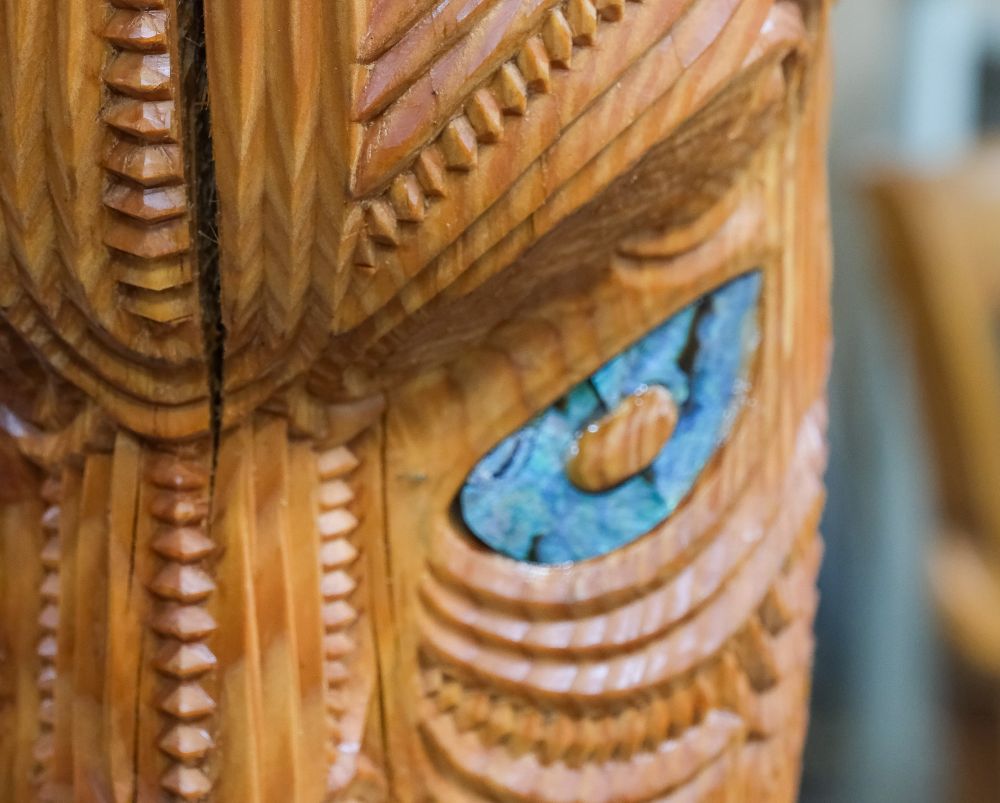
A collective of carvers in Kāore Te Ngahere Ka Mate Te Whenua – a Vision Mātauranga Capability Fund research project – rated the carving performance of ten exotic timbers. This research was co-led by Te Taonga Ltd and the Bioeconomy Science Institute Maiangi Taiao.
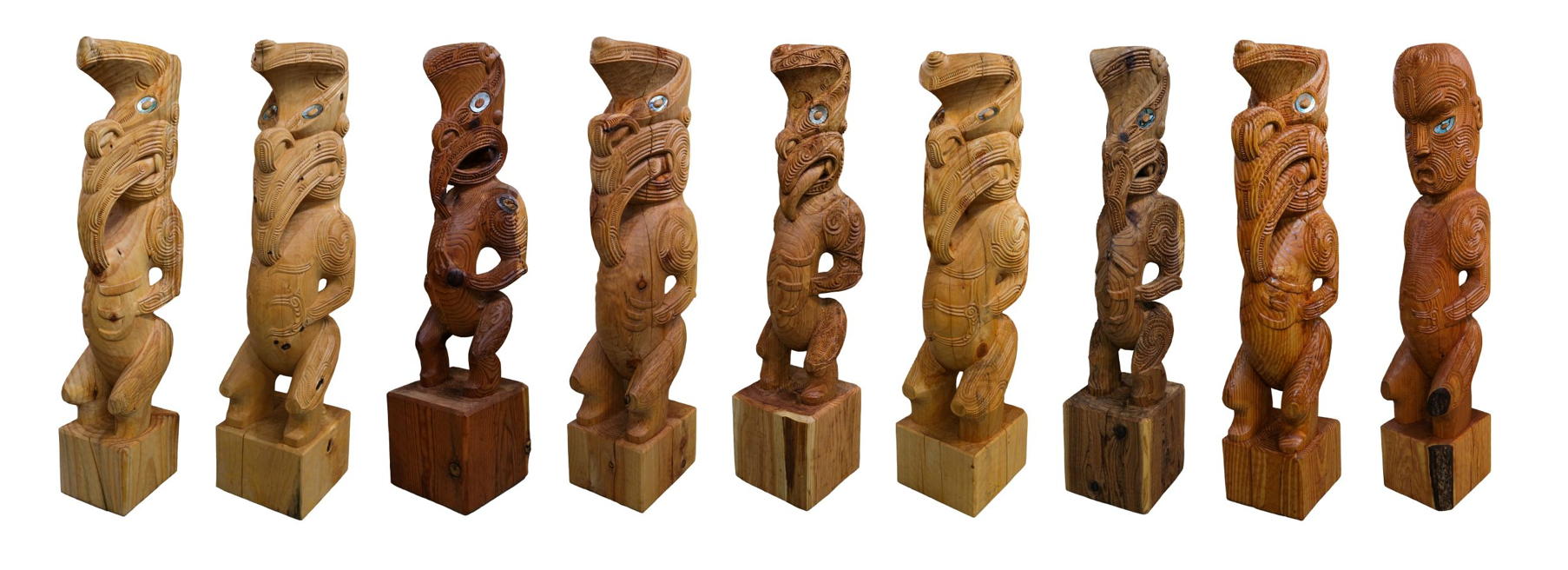
Ngā Rākau Manene refers to the group of tekoteko that were carved during this second stage of the project.
Assessment of ten exotic timbers for carving
Master carvers in our research team assessed ten exotic timbers. These ten timbers were selected in stage one of the research, based on quantitative measures of data on durability, hardness, carvability and availability of a wider selection of timber species. This data was then ranked, and ten species were selected for assessment (stage two).
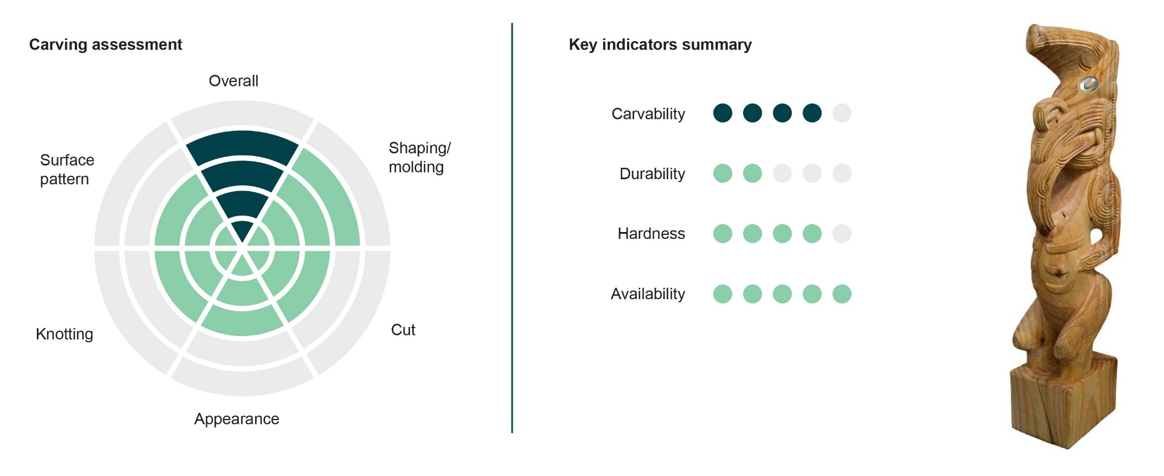
The ratings and assessments for the ten species and how they performed in carving can be found below. They were assessed according to the grain, how the wood behaved, how it appeared, how well it shaped or moulded and how well it cut. Carvers also determined how density affected the carving, how well the surface patterned and how knotty the timber was.
Tekoteko from nine of these timbers were produced and are on display outside of Te Whare Nui o Tuteata at the Scion group campus in Rotorua. One of the timbers was assessed based on past experience, given that the carvers had all worked with the timber before. Carvers assessed and rated the ten timbers based on grain, moulding, how well it cut, how well surface detailing could be added. In the sections below, we highlight the results for each timber, sitting alongside earlier data on hardness, durability, availability and shrinkage. Shrinkage is useful to determine how well the timber laminates.
Findings
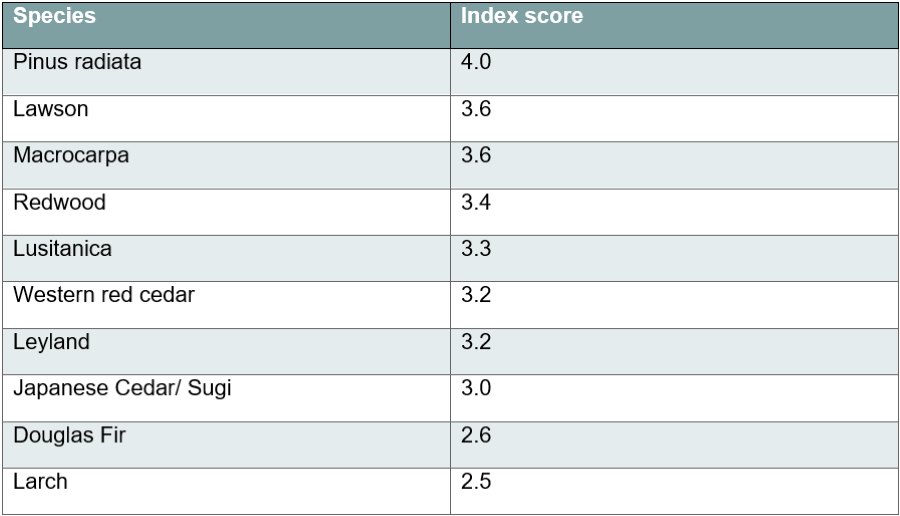
Using the data from the assessment, we created an index score shown in the table below. Carvers should consider the type of carving they want to achieve when selecting the timber to use. While scores suggest that there is a “best” timber, this is not the case as timbers behave and appear differently. There are different reasons why carvers might choose certain species that did not perform as well according to this scale.
Index score: 4.0
Feedback
- Fairly straight grain, with cross grain around knotty areas
- Not splitting as much as other species
- Spongy on the end grain
- Some softness can make it difficult to design
- Potential concerns with decay
- Fairly consistent once you have the right (longer) bevel angle
Acknowledgements
Carvers: Grant Marunui, Akira Huata, Hamiora (Sonny) Ngaheu, Manawaru Rangihau, Haami Te Aho
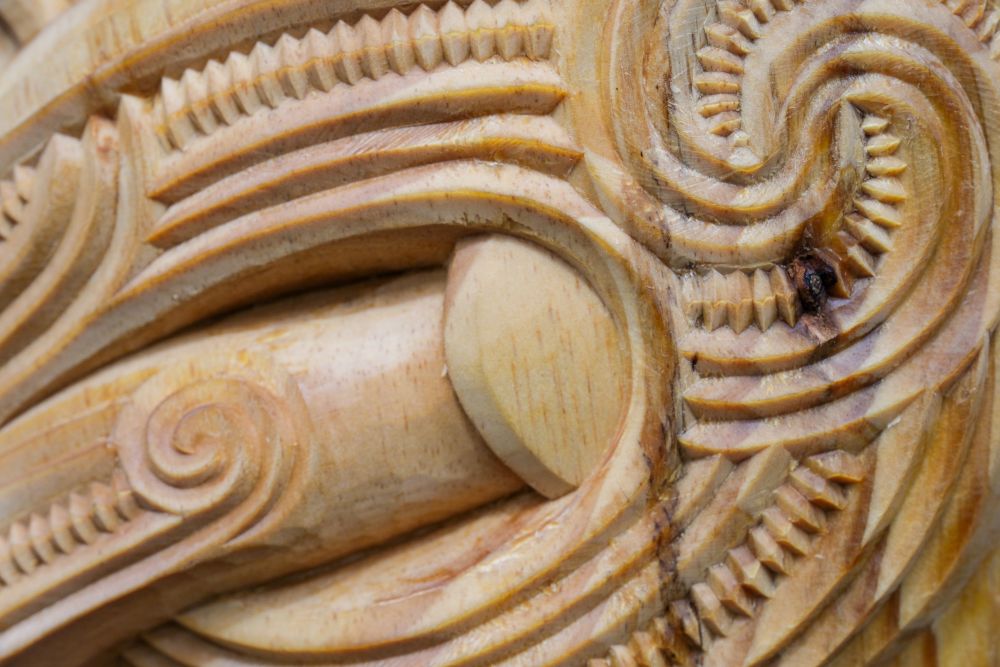
Index score: 3.6
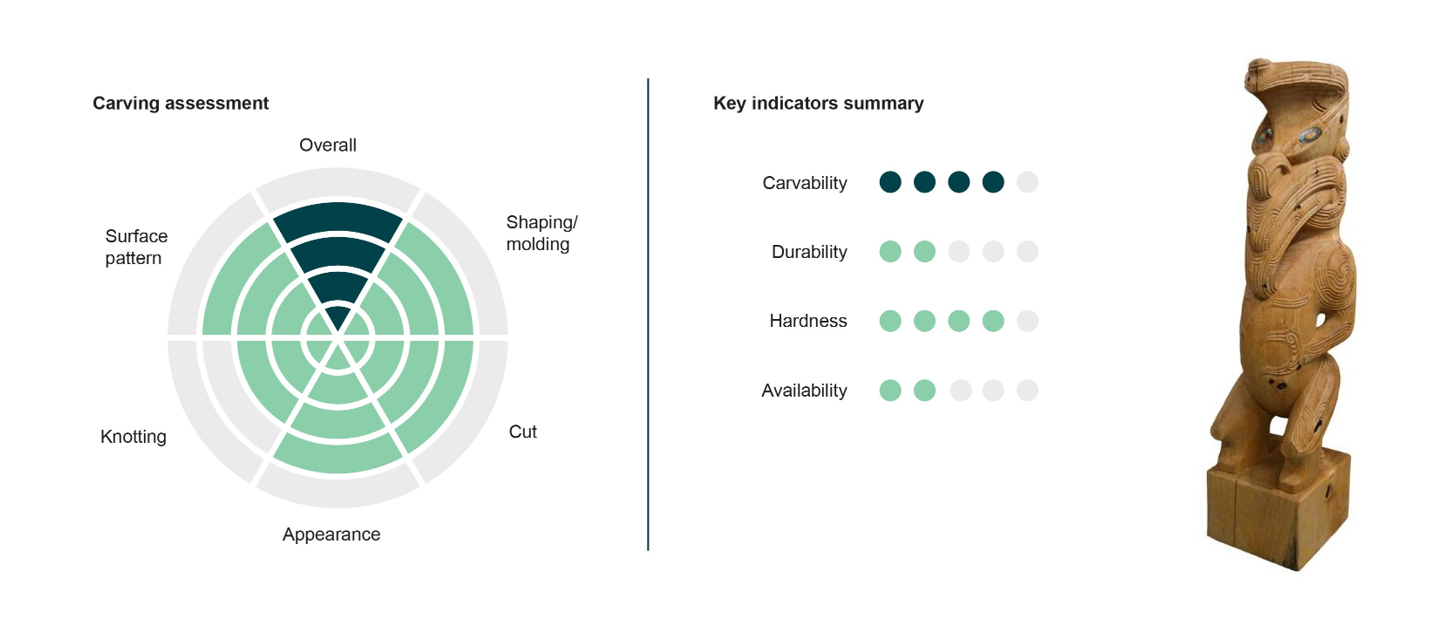
Feedback
- Very beautiful grain
- Mostly consistent
- Quite sound and forgiving
- Carved the same as Leyland but softer and smoother to carve
- Does not bunch up and tighten
- Low tension on chisel blades
- Easy to push clean
- Very nice and workable timber
- Would carve again - carves and moulds well
Acknowledgements
This tekoteko was carved by Kawana Waititi, Totoki Arts
Instagram: @totoki_kawana
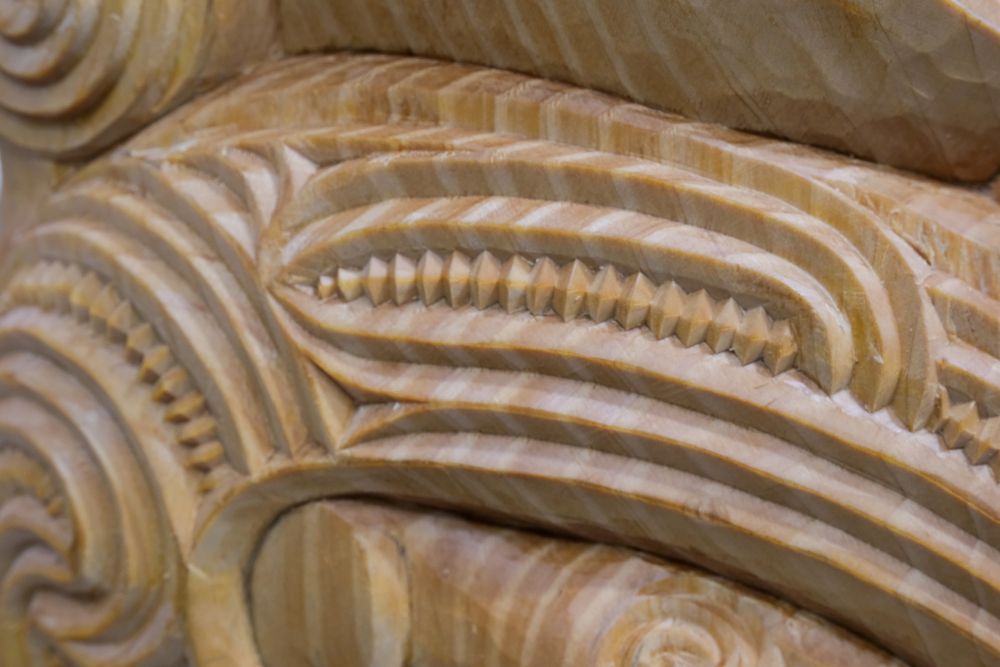
Index score: 3.6
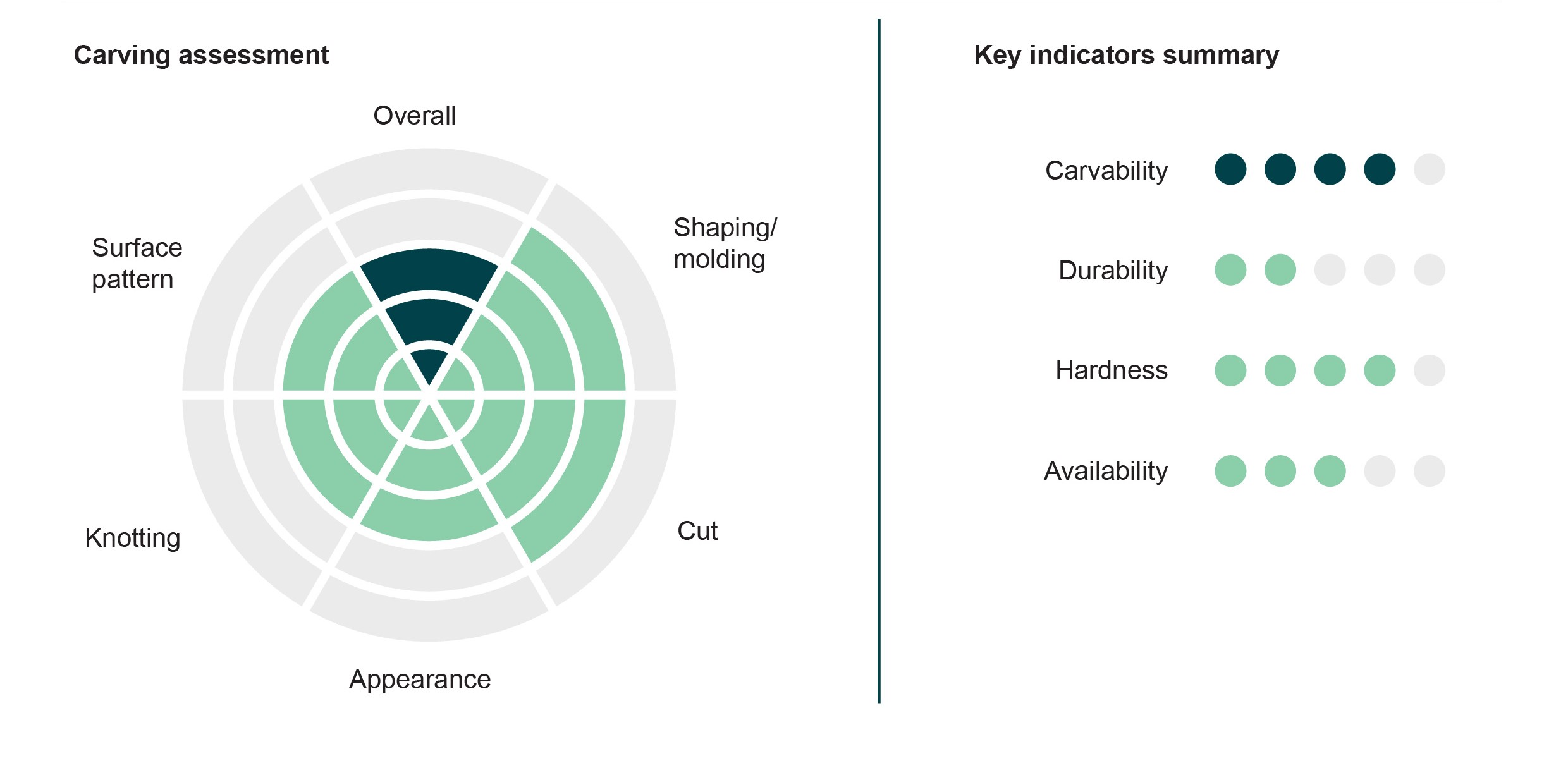
Note: Macrocarpa was not carved as part of this assessment. However, the carvers involved had all carved macrocarpa before and had assessed performance based on past experience.
Feedback
- Soft, tight and wavy grain that twists around and along the wood
- Spongy sapwood that bunches up with transitional wood
- Nice heartwood that has a tight grain and is consistent to carve
- Can be hard to mould
- Grain is easy to design - holds well but will eventually crack
- Good carving experience
Index score: 3.4
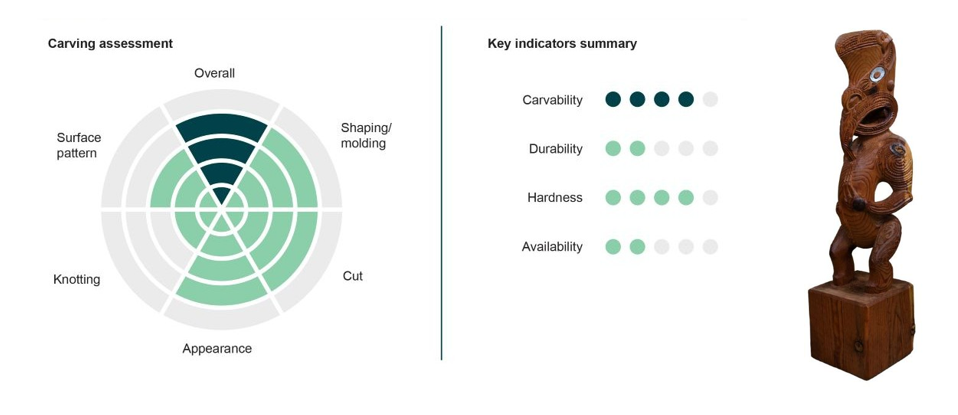
Feedback
- Nice straight grain
- Relatively soft
- Little bit stringy, but remains consistent
- Good density for carving
- Has a tendency to crack
Acknowledgements
This tekoteko was carved by Shannon Wafer - Atakura Arts.
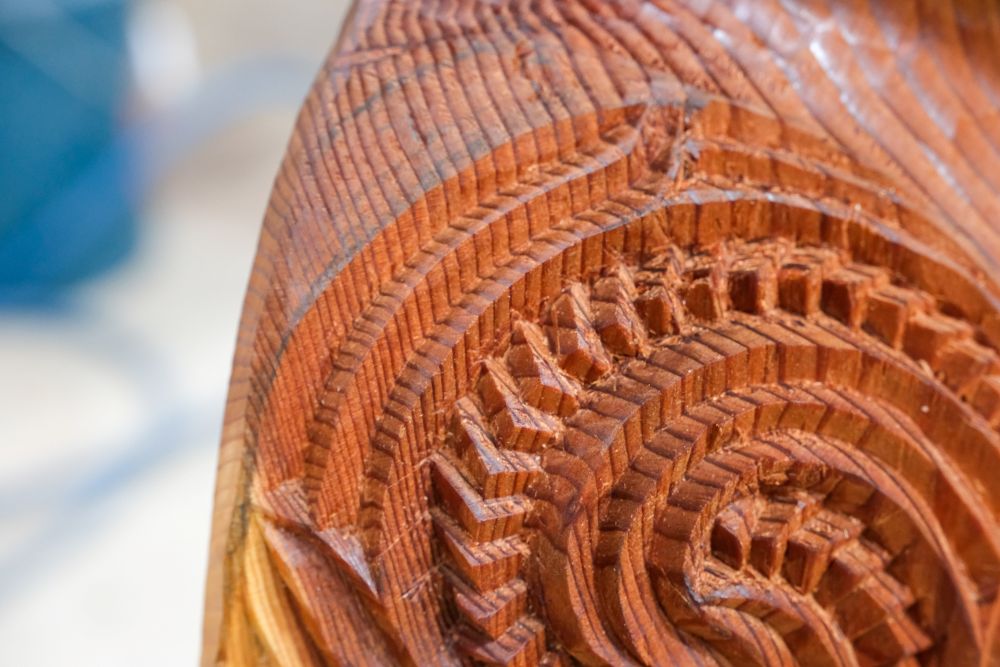
Index score: 3.3
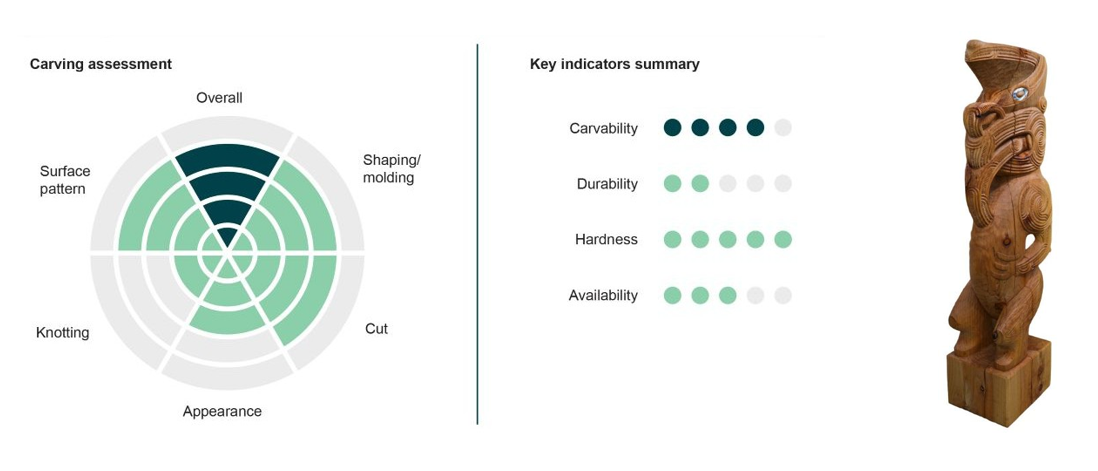
Feedback
- Grain was fairly straight
- No spongy areas
- Medium density
- No stringy grain
- Holds nice edge when designing
- Highly recommend for carving
Acknowledgements
This tekoteko was carved by Grant Marunui - Tumu Whakairo Rākau, NZMACI, Director Te Taonga Ltd.
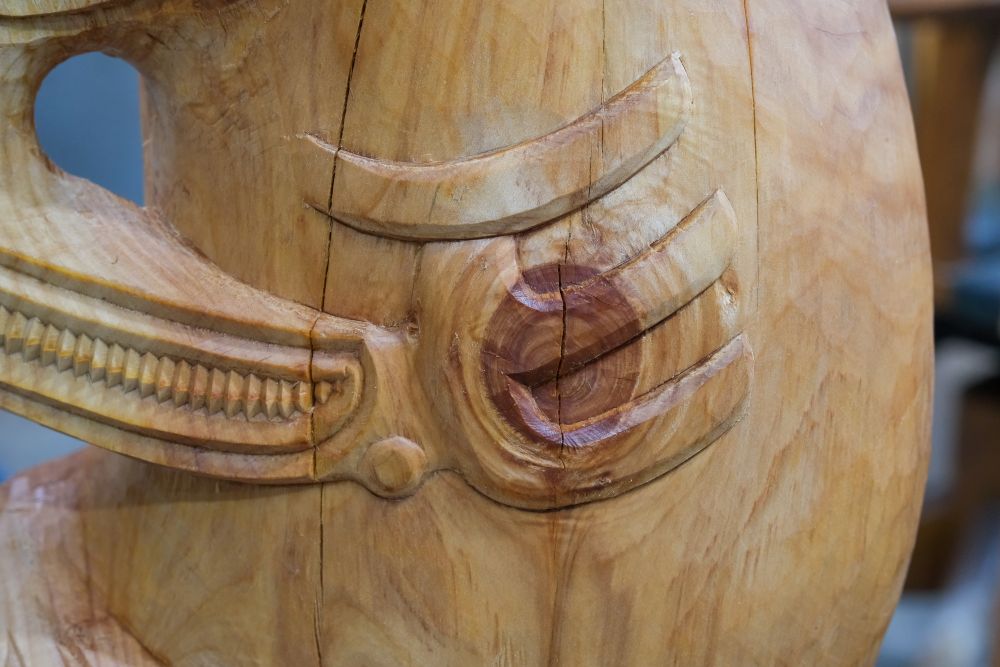
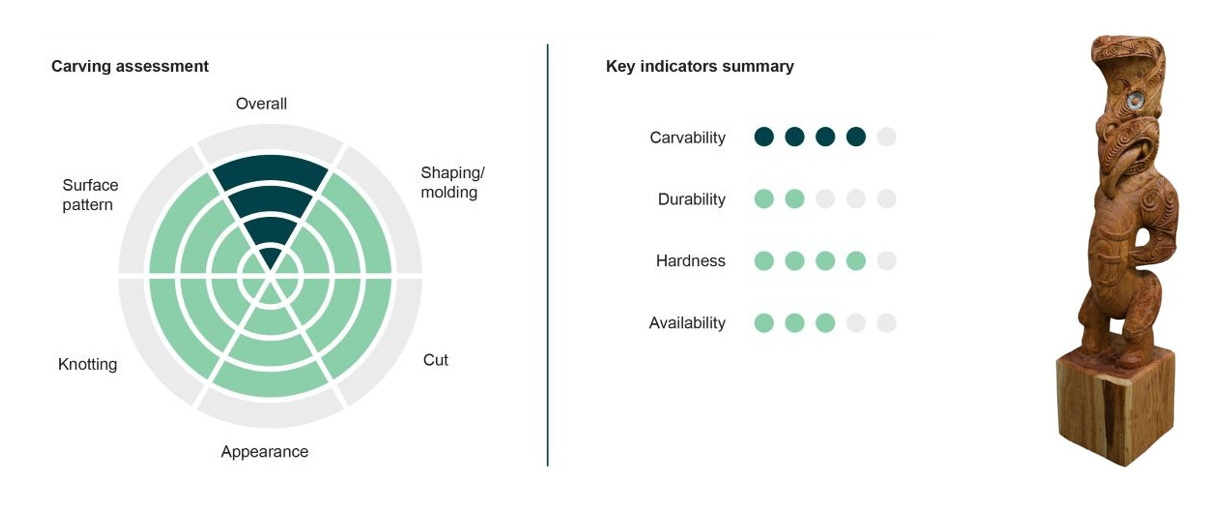
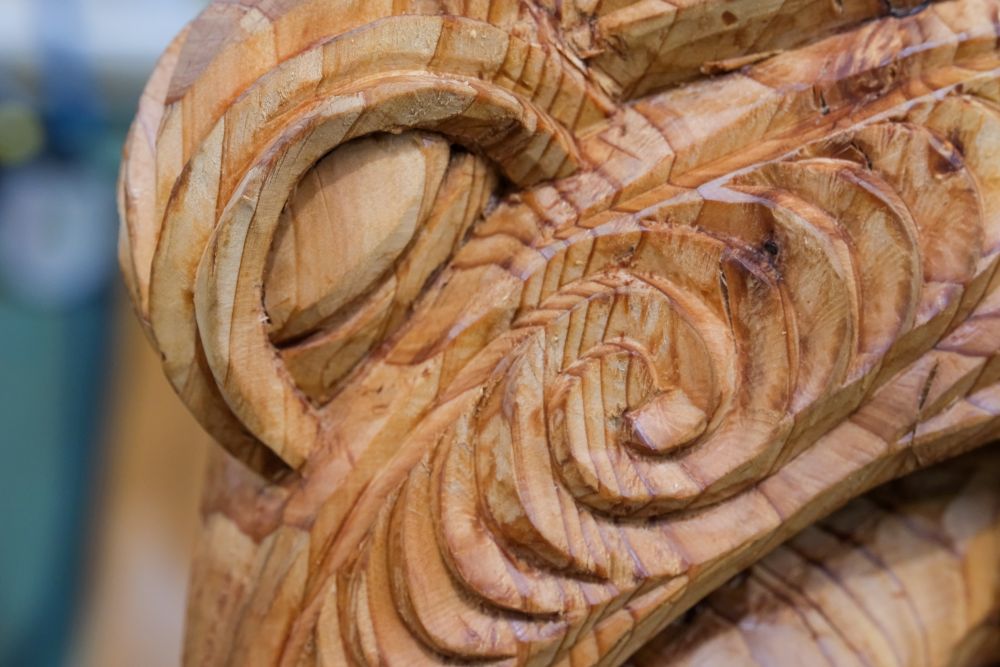
Index score: 3.2
Feedback
- Nice straight grain
- Minimal knots
- Similar growth rings to redwood but harder/denser
- Nice tight grain
- Soft but holds together well
- Stringy when dry
Acknowledgements
This tekoteko was carved by Shannon Wafer - Atakura Arts
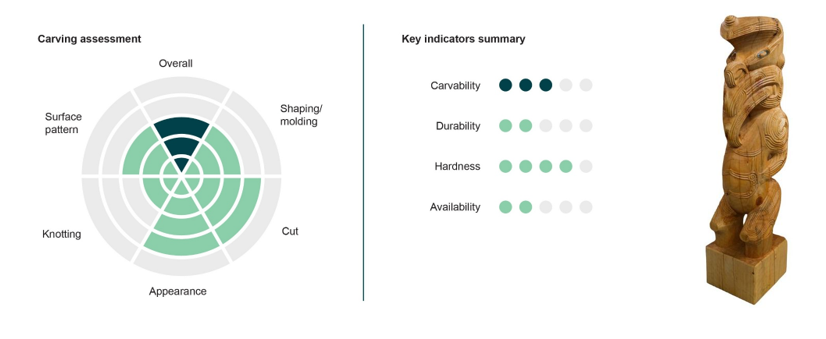
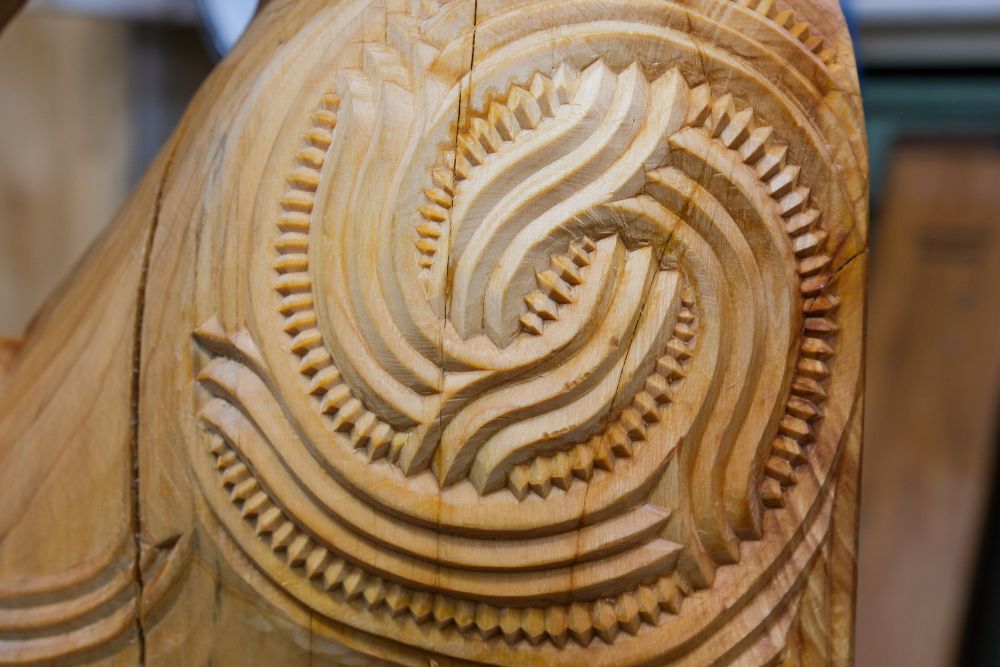
Index score: 3.2
Feedback
- Runs nicely when grain is clear
- Around knots are the trickiest part
- Is a really dense, hard wood
- Really tight grain
- Need a bit of experience to carve this wood
- Would carve again
Acknowledgements
This tekoteko was carved by Kawana Waititi - Totoki Arts.
Instagram: @totoki_kawana
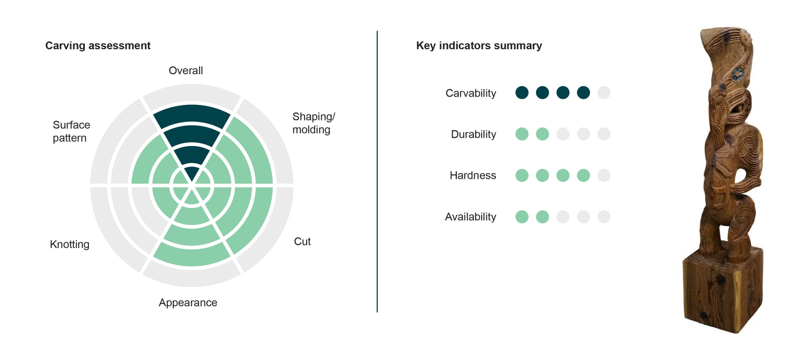
Index score: 3.0
Feedback
- Grain - straight, tendency to split along grain very easily
- Soft and easy to carve
- Tight grain density
- Forgiving to mould
- Tendency to be stringy, resist urge to pull strings
- Would use again
Acknowledgements
This tekoteko was carved by Shannon Wafer - Atakura Arts.
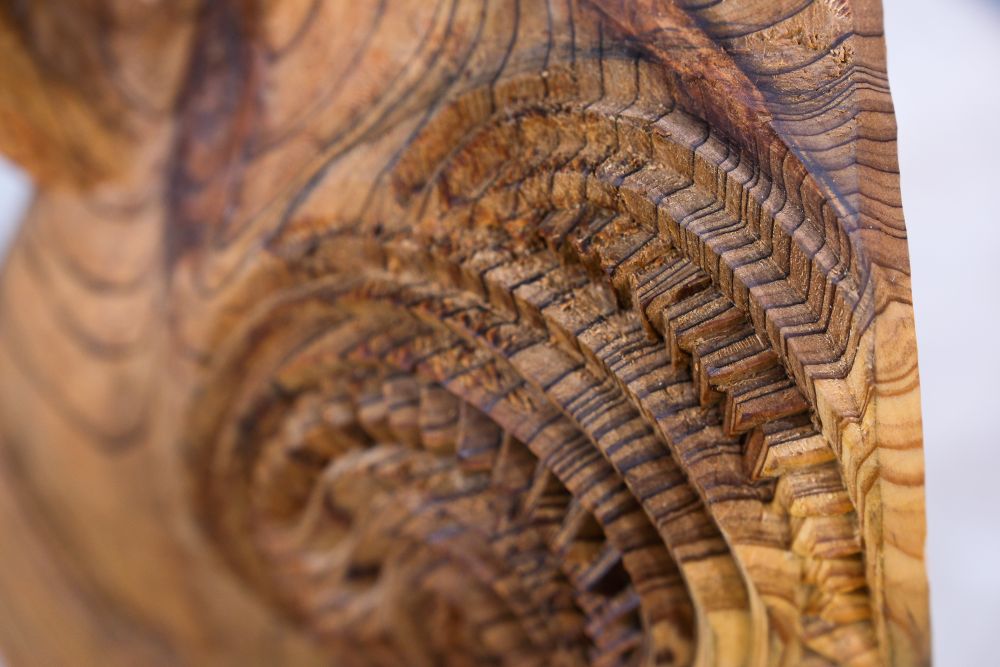
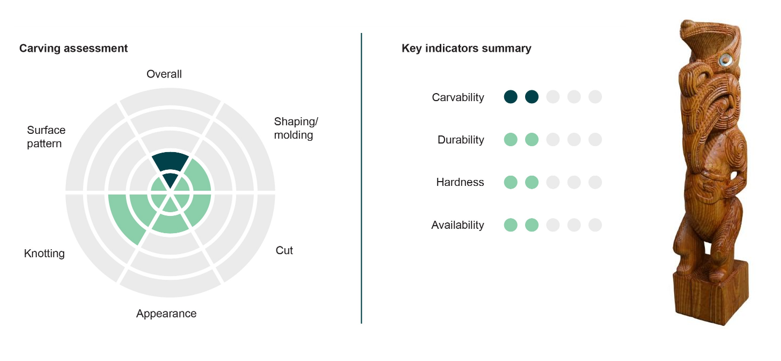
Index score: 2.6
Feedback
- Wavy grain in areas and is visually pleasing
- Has a lot of movement
- Is soft (like weetbix) and hard (like glue or Maire) between growth rings
- Can be hard to get blade through resinous pieces
- Can be rough moulding and is challenging to design as the blade goes through hard and soft layers
- Need to lengthen bevel on chisels to get better grab when moulding
- Adding oil can make it slightly easier to carve
- Could be appropriate for big scale carvings
- Balanced angle on bevel
- May not work for finishing off designs like pakati
- Sometimes may need to clean loose strands and dapt or scrape which is not ideal
Acknowledgments
The following students contributed to this carving: Wetere Scrimshaw, Tiaan Greig, Tamaiti Anderson.
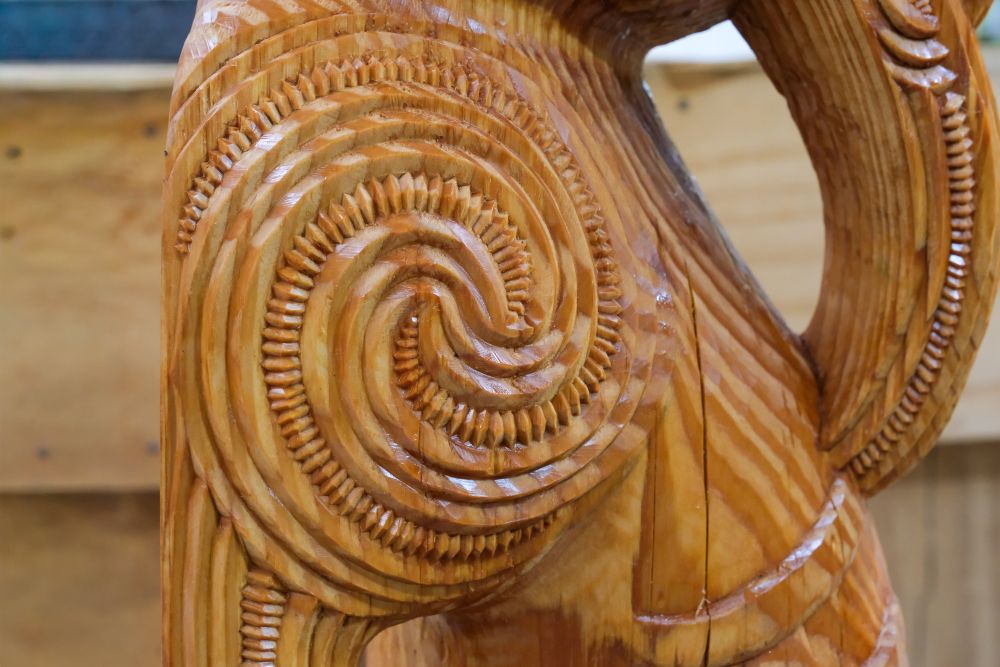
Index score: 2.5
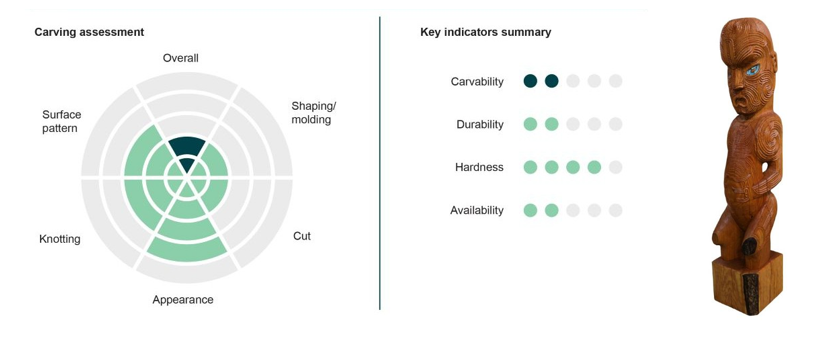
Feedback
- Grain and colour is salmon-like, is distinct and clear grain
- Straight grain but there are lots of obstacles to work through
- Inconsistently varies between hard and soft, making it tricky to carve
- Wood is very dense
- Had to use grinder for some parts
- Chisels for moulding was difficult
- Was tough to carve
- Recommend not using, especially for intricate whakairo
Acknowledgements
This tekoteko was carved by Kawana Waititi - Totoki Arts.
Instagram: @totoki_kawana